|
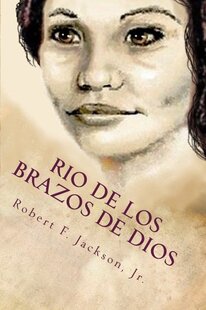
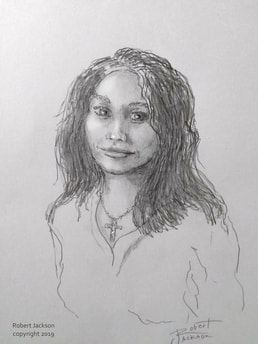
Angelina Pilar Perez
Model: Rosario Jackson 
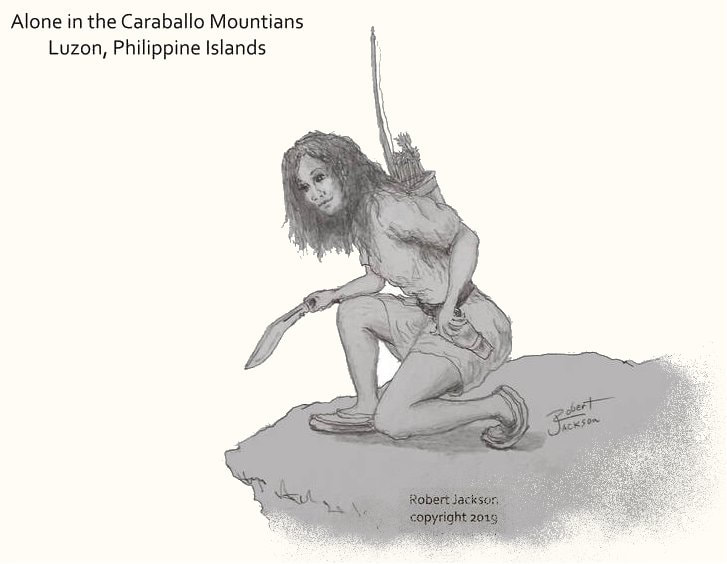
. . not just fiction The primary themes in these works are self sacrifice for loved ones and egalitarianism.. equality with no guarantees but the right to strive and succeed, thus ..equality as people ~ The author is truly ethnically and racially colorblind and has been most all of his cognizant life. That's not "woke." It's Christian. And that, the Christian faith, patriotic national pride, and courage within fear are the other primary themes in these novels. If choosing to read, expect real grit, ..earthiness, not for the faint of heart or prude ~ No gratuitous sex or violence . . but edgy romance when it would be in reality, and dangerous ~ Strong Christian, ethical protagonists, nevertheless flawed and tough {for their tough times} ~ Unabashedly descriptive of the world's beauty and beautiful women in their ethnic variety and cognizant of their intellect and character as well ~ People pushed to their limits, like Kathleen (before she was "the Jaguarundi") lost alone in the Caraballo Mountains of central Luzon in the big Philippine Archipelago, deep in the forests, lost among competing tribes of headhunters ~ Christians of the two primary over reigning faiths that built America, Protestants and Catholics, the latter dominant in the Southwest and Pacific, particularly the Navajo and Mexican characters and the people of the Philippines.
|
FEATURED NOVEL



From this
publisher and author
|



|

|
|







|
Literature . . not just fiction Trade winds & trails . . . Presenting a collection of historically set novels within which several Americans from all walks of life and differing cultures and ethnicities wear faith and national pride, nationalism, with exemplary courage in dangerous times. This Winding Thread of related stories is driven by the adventurous of heart protagonists who, in the years after violent conflict, begin an unconscious mending through their cultural interaction. And, across the big Pacific, where American colonial adventurism finally runs its course. The violent conflict still raged in the American colony of the Philippines, yet the daring still dared to swim upstream. Such people have always existed, egalitarians at heart in more racist eras. And often love really did conquer all. Three short related series of connected novels: Sunny of the Old Southwest set across America from the Shenandoah Valley of Virginia, across the South and Southwest to the Pacific, tells of a momentous meeting of a young Navajo woman and Civil War veteran from Virginia. [4 volumes] Magandang Pilipinas follows a few Visayans of the central Philippines and their American friends in the Philippine Islands as their opposing militaries clash over control of the archipelago that U.S. authorities think they have won from Spain and Philippine leaders think they have won independent control from Spain. But, does the Philippines need America more than the leadership realizes. [3 volumes] Jaguarundi follows the growth of a half Navajo half white woman who suffers much but is blessed as well and tells of her willing turn, to match her heroic parents, towards danger for a cause and an adventurous life. [4 volumes, vol. 3 is a work in progress] |
 


|


|

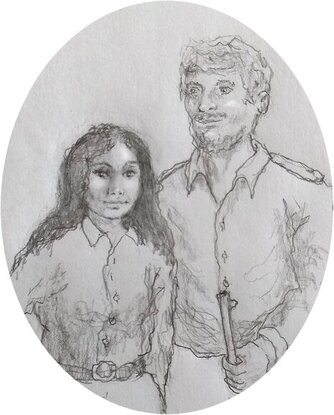
Capt. George Allison and Kathleen Jefferson,
"the Jaguarundi" an Early 20th. Century Adventuress born 1876 |


|
What a Moment it Was
About Independent Publishers Many of the English language's greatest literary works, fiction, nonfiction, and poetry were first published privately or semiprivately, as each author, many later to become famous and even iconic, sought to start their careers. Often a first work turned out to be an author's best work but attracted no publisher to a then unknown literary artist at the time of first completion. By semiprivately" we simply mean the author was published, probably in a small print run, by a small publishing house or bookshop/publisher who was a personal friend or acquaintance. If memory serves correctly Hemingway's in our time (as opposed to the later In Our Time) and (T.E. Lawrence) Lawrence of Arabia's Seven Pillars of Wisdom, were similarly first published. For myself, as a painter, I only resisted writing early on because private publishing was too expensive for me and seeking a large publisher didn't interest me due to my artist's personality. As a capable sketch artist and painter from an early age (arguably even a bit of a child prodigy), I would never let anyone take a wet brush or pencil to my work. Neither would I with sculpture or any other artistic medium. What artist would? So why let my writing be edited? It is the same thing. The answer is that publishing houses invest money to mass produce a writer's book. To do so they must save cost and make a book more readable to more people, to larger interest groups interested in that type of book, larger "mini-masses," if you will. |
Thus some, perhaps most, modern era literary artists (writers) saw their work cut up. Again if memory
serves, Look Homeward Angel, a seminal signature work was drastically cut, and the artist, Thomas Wolfe first thanked his editor and then, matured years later, lamented the edit. Both the edited and uncut versions are available now. As an artist, with a wide and varied background, I trust my "product," flaws and all, and have been more that encouraged by the praise of very experienced, educated, knowledgeable readers who are widely read in many genre and have contacted me. In my humble opinion, we previously had editors, not because they were naturally necessary, but because of the expense of printing. Now printing is within the writer's, the "literary artist's" reach. Publishing is part of the writing process now. I find the idiosyncrasies of a writer to be part of their work. Some break rules intentionally and set knew standards. If done well, that becomes part of their signature style. Are editors necessary? Yes, often. There are those writers however who have unique styles, my almost painterly use of spacing and punctuation, for example. An editor might have wiped all that out. |
fishers of men

Introducing "Sydney"
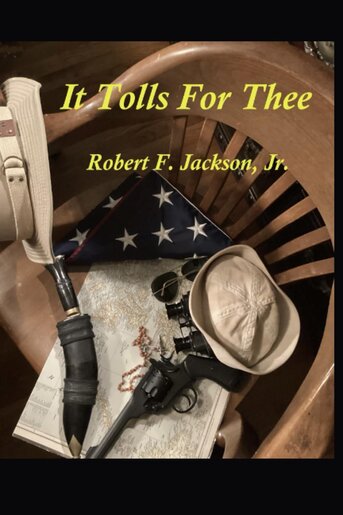
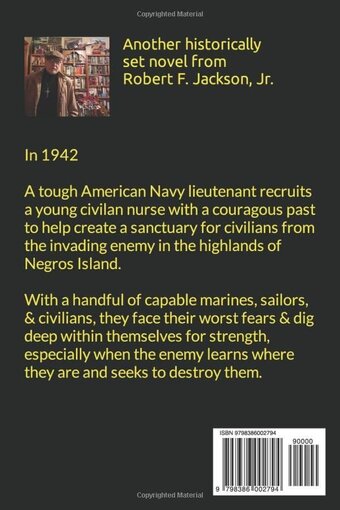
Finally a blonde heroine in a Robert Jackson novel. Previously, with strong white secondary characters, I have focused on minority heroines, as I have concentrated a bit much on proving that we traditionally conservative folk are not racists (particularly addressing that point to the woke crowd and those who might believe them). Many of these fictional strong, often darker, girls and women of non-white ethnicity were inspired in various ways by my wife, a heroine in many small ways (and, as an unusual nurse, in bigger ways). Now in the novel below, a white American heroine rises to prominence from within a book filled with the brave of wartime. In the person of Sydney, an intelligent, lithe, athletic, blonde rising senior at Hayward Union High School in the San Francisco Bay Area, we watch war touch an American family and youth as she and her college professor parents are trapped in the Visayan Islands of the Central Philippines as invading enemy forces cut off ports, airports, shipping lanes, and airline routes of escape to home, half a world away on the opposite side of the planet.
Included in a wide ensemble cast of characters in this book is the half white half Navajo "Jaguarundi," (Sunny Kathleen Allison) from earlier books, in her late middle-age, who mentors the capable and talented teenager through 3.5 years of war in the jungles, mountains, and fields of the sugar producing Negros Island in the province of Negros Occidental.
[Although part of the Jaguarundi series, this book very much stands alone and can be picked up and read without any prior knowledge.]
Finally a blonde heroine in a Robert Jackson novel. Previously, with strong white secondary characters, I have focused on minority heroines, as I have concentrated a bit much on proving that we traditionally conservative folk are not racists (particularly addressing that point to the woke crowd and those who might believe them). Many of these fictional strong, often darker, girls and women of non-white ethnicity were inspired in various ways by my wife, a heroine in many small ways (and, as an unusual nurse, in bigger ways). Now in the novel below, a white American heroine rises to prominence from within a book filled with the brave of wartime. In the person of Sydney, an intelligent, lithe, athletic, blonde rising senior at Hayward Union High School in the San Francisco Bay Area, we watch war touch an American family and youth as she and her college professor parents are trapped in the Visayan Islands of the Central Philippines as invading enemy forces cut off ports, airports, shipping lanes, and airline routes of escape to home, half a world away on the opposite side of the planet.
Included in a wide ensemble cast of characters in this book is the half white half Navajo "Jaguarundi," (Sunny Kathleen Allison) from earlier books, in her late middle-age, who mentors the capable and talented teenager through 3.5 years of war in the jungles, mountains, and fields of the sugar producing Negros Island in the province of Negros Occidental.
[Although part of the Jaguarundi series, this book very much stands alone and can be picked up and read without any prior knowledge.]
|
Robert Jackson's American Art
In the broader scope of study only three things matter: Christianity, the one true faith; whatever you are doing now; and history, what you and others have already done. The latter is the source of knowledge, tradition, memories, and anything else that is usable and important in the "now," the present. It encompasses all of the other disciplines, as well, and each science, art, and literary tradition has its own history. Auto or airplane mechanics, ship design and opera ... all fields, literally all things, have a history ranging far back in time.
All images and text on this website {except for links, advertisements, and otherwise noted}
are the copyright of Robert Jackson. |
